
Photo SHOOT: Is That Word Too “Triggering?”
While we were creating a schedule for a photoshoot recently we were asked “how many people can you shoot in an hour?” It was the only sentence in the email, so it stood alone on an otherwise blank white screen and made us think for a second. Out of context of photography, “how many people can you shoot in an hour?” sounds like a great way to get the FBI’s attention.
This phrase led us to start pondering some common photography terms, and again out of context, they don’t look so great:
Shoot
Shooter
Main shooter
Second shooter
Trigger
Master
Slave (more on these last two later)
When we’re talking about these terms, it’s important to keep in mind that photography was invented a LONG time ago (1822 to be exact), and things were very different then. Our question is whether these terms are still okay to use now or should outdated terms be updated? Using some of these terms is frankly starting to make us uncomfortable, so we wanted to ask ourselves why, and what we could do about it.
The Early Days: Cameras and Guns
It should be no surprise that the term ‘shoot’ predates photography, and even guns. The word originally comes from the Old English ‘sceotan,’ which means to propel or throw. Back then, it was all about stones, arrows, and other primitive projectiles you could lob from a slingshot, and then later, it’s been primarily used to refer to bullets fired from a gun.
When photography was still in its infancy, cameras were about as big and bulky as your grandma's old armoire. The process of capturing an image was no easy feat—it required a lot of effort and a giant wagon with all the gear to pour chemicals on a metal or glass plate to make a picture. Photographers had to set up massive contraptions, adjust various settings, and then finally snap the shot, usually outdoors with full sun to get enough light to make the exposure. Photographers began using the term "shoot" to describe the act of taking a photograph because was time and labor intensive, and reminded everyone of a hunter spending all day crouched in a bush waiting for a deer to walk by and then carefully steadying themselves and their aim with a firearm.
Most of us learned the term “snapshot” as a picture taken with a camera, and Kodak definitely made sure of that when it created its first smaller, consumer cameras in 1888. Their first camera was called the “Kodak #1” and came preloaded with small celluloid film (no more giant metal plates to develop in the back of a wagon!) and you would ship the entire camera back to the company to get developed and prints made.
Kodak advertised the pictures it took as “snapshots” because that word, only recently coined in 1860, was popular as a firearms term meaning to fire your gun quickly without aiming. In fact, the camera had a waist-level viewfinder, meaning you didn’t bring the camera up to your face to look through it, and instead you looked down at a small glass-covered hole at the top of the box-shaped camera in order to see where the lens was pointed. This mimicked the “snapshot” draw of a gunslinger in the wild west pulling his gun out of his holster and firing it while it was still at his hip.
When photographers started to add artificial lighting to take photos more quickly and not have their shutter sit open for several seconds hoping their subject could hold a smile that long without moving or blinking, they turned to guns again. Before flashbulbs, they used flash powder, which is a mixture of flammable powder similar to gunpowder, and they would ignite it to create a bright flash of light.
So what?
Okay, I get it, you’re probably thinking, lots of correlations between guns and cameras, so what? That’s how we usually reacted. Until one day, we were setting up lighting and a backdrop in a conference room at a client’s office. We started testing our lighting, which flashes, and a woman came running over, breathing heavily and with a look of panic on her face.
She saw the flashes from our equipment and momentarily thought a mass shooter was in the building. She had, in fact, been a mass shooting survivor in that same building only a few months prior to our photoshoot.
With mass shootings and gun violence consistently on the rise in our country, using terms like “shooter” in our everyday language around the studio seems a little … well, violent. Especially when we go to great lengths to make our studio a safe place for people to feel secure and confident when having their photo taken, which can be a vulnerable experience. Some people already hate having their photo taken enough as it is, do we really have to equate it with a gun?
Master / Slave
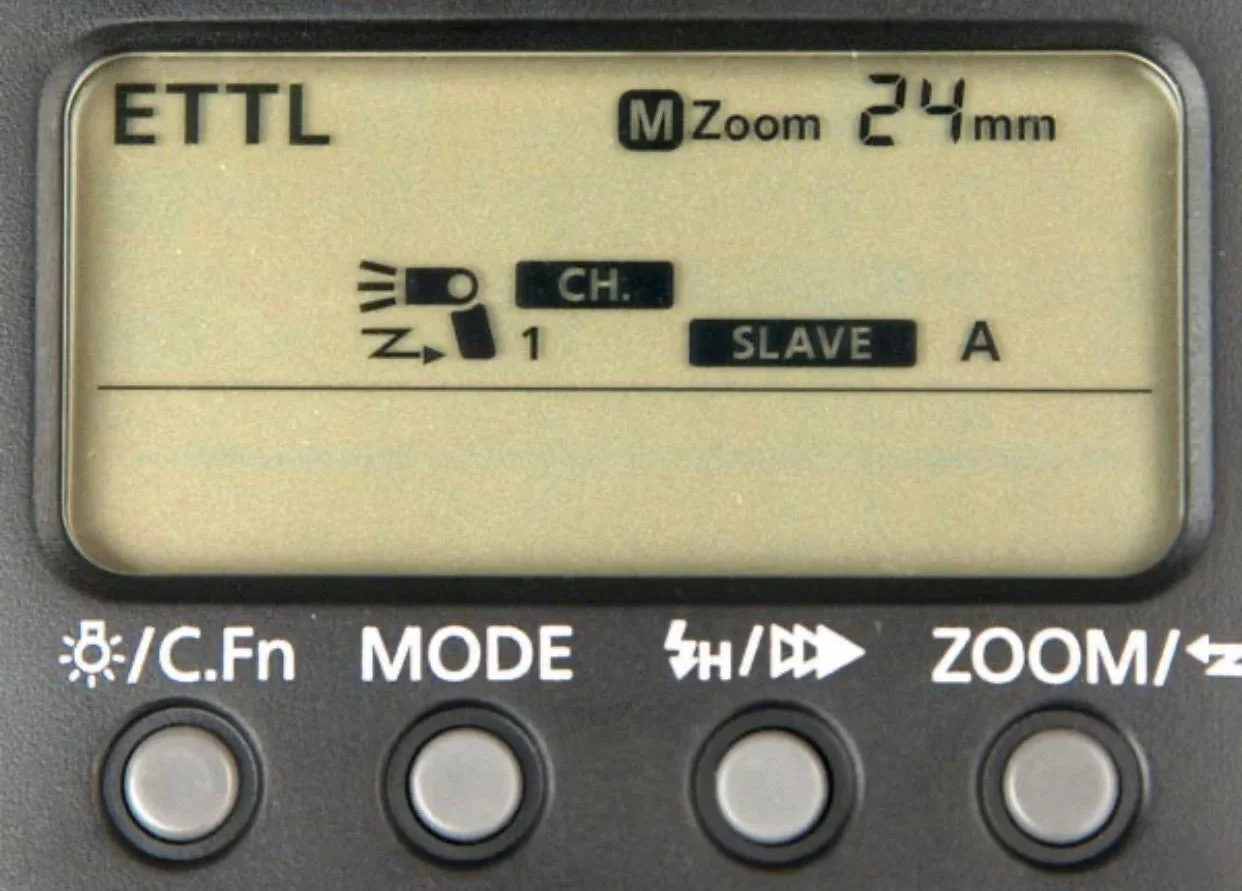
Here’s something you might not have known about the photography world: the terms “master” and “slave” are actually widely used for a specific function in lighting equipment. In strobe lights (lights that flash) most models have a built-in function to be what the industry calls “slave mode.” There’s a sensor on the back of the light to sense when another light flashes and it will flash at the same time. The lead light is called the “master” in this scenario, and any lights set to receive its signal are known as “slave” lights.
I can’t even begin to tell you how troubling it is to have to say, “don’t forget to make that light a slave” to each other on photoshoots. And we’re definitely not the only industry trying to remove those same problematic terms.
The real estate industry has spent the last several years working together to remove the word “master” in its vocabulary because of its racist and sexist undertones. You might have noticed that home listings and renovation TV shows now call the biggest bedroom the “primary bedroom” instead of the “master bedroom.” In 2003, the County of Los Angeles asked their suppliers to remove the terms from their products and services. In the last few years tech companies like Drupal and Microsoft made a push to replace the terms in their programming repositories.
So we’ve been thinking a lot about what words we can use in our studio to move away from some of the outdated terminology which at best gives us a little cringe or offends someone, and at worst makes them relive serious trauma. And we’re starting to catch and correct ourselves and each other when the words escape our mouths and replace them with other words.
In our studio: “Shooters” are now “photographers” or “togs” since it’s shorter to type. “Master” light is now “main” light and “slave mode” is now “receiver mode.”
Are we being snowflakes about it?
Nah. Again, I’ll point to the example of the mass shooting survivor who saw our flash bulbs coming from a conference room and thought the flashing emergency alarm was going off, just like it did when she heard gunshots from down the hall and had to run for her life. Would anyone laugh and tell her to just get over it? I should hope not.
According to survey results posted by Everytown, "58% of American adults or someone they care for have experienced gun violence in their lifetime." By calling photographers “shooters” we’re telling the millions of people affected by gun violence in our country that we’re not actually referring to guns (even though we’ve already pointed out the correlations made between guns and cameras over the years), so they should just buck up and not be so sensitive.
It's saying that terms like “master” and “slave” on a photography set have nothing to do with the Antebellum South or the estimated 50 million people currently living in modern slavery globally (that's 1 in every 150 people, as reported Walk Free's Global Slavery Index in 2021), so if it conjures up reminders of the brutality your ancestors endured and the continuing racism our country and global slavery that still hasn’t resolved, that’s a "personal" problem.
We, as a group, whether that’s as a people, an industry, or just one photo studio, can and should do better to heal old wounds. It doesn’t hurt us to use new terms, and goes a long way to repair and prevent damage.